
Which graphic design art styles are right for your business identity?
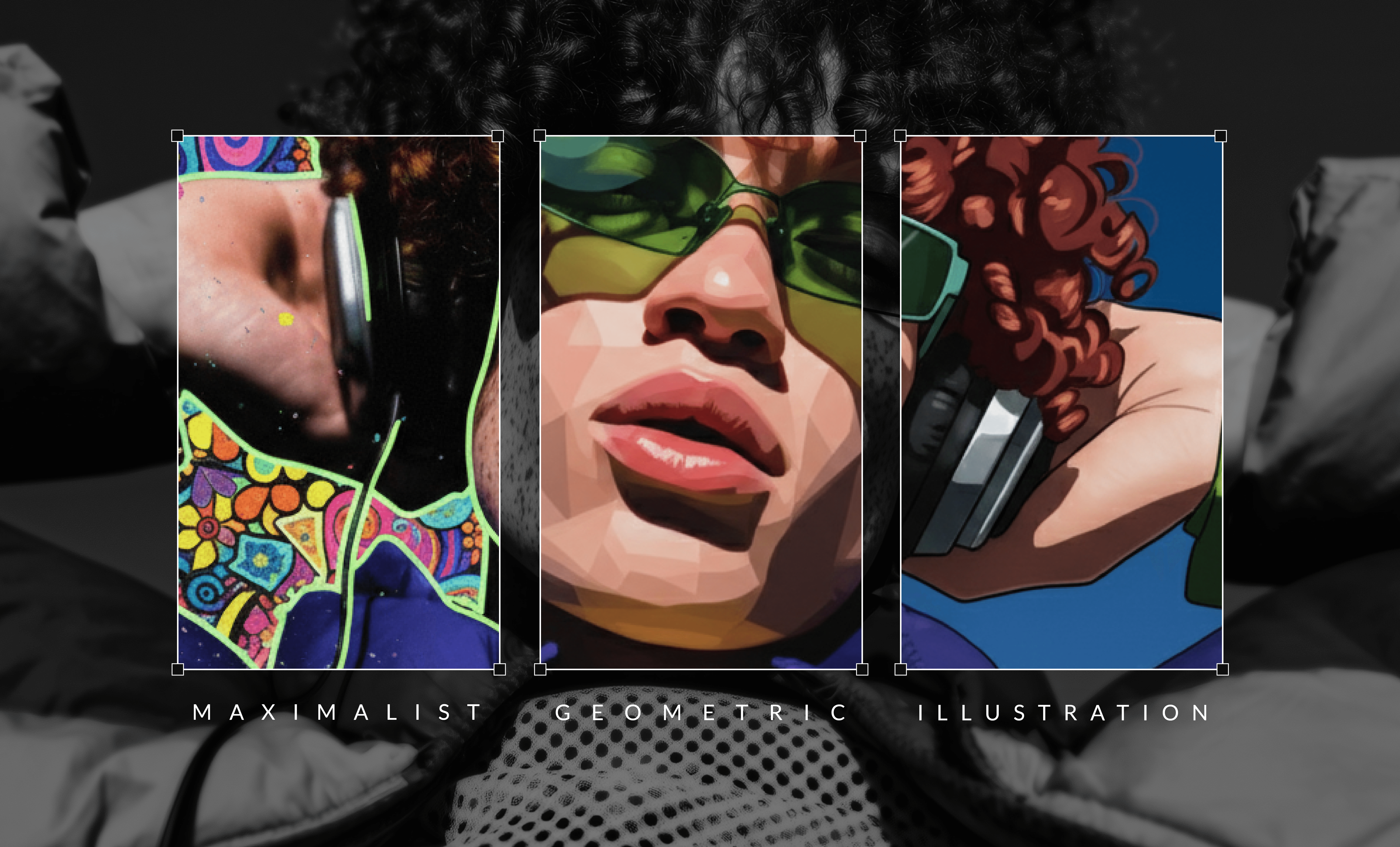
Design is often the first bridge between a curious viewer and a potential customer. Too often, we see brands picking what looks “cool” instead of what feels true to who they are. And that’s not just an aesthetic judgment but a missed business moment.
People lean in with interest if you build your brand's visuals with intention, but if you miss the mark, your brand becomes forgettable fast.
A quick gut-check for your brand
Run through these questions. If any make you pause, your brand might not be rooted in your business’s voice:
1. Does your brand create recognition instantly?
If someone saw one of your visuals in the wild, would they know it’s yours without seeing your logo? A consistent visual language makes your brand recognizable everywhere, from social feeds to billboards to inboxes.
2. Do your visuals build trust?
When your designs look considered and consistent, your brand feels credible. Without consistency, people hesitate in making a purchase, even if your product is solid.
3. What emotion do your designs trigger?
Designs made with the intention to convey are a shortcut to feeling. If you can’t name the emotion, your audience can’t feel it.
4. Is your design helping your team move faster or slowing them down?
When your team knows the rules of fonts, colors, and illustration styles, work ships faster and stays on-brand.
Before you dive into design trends, understand your brand’s personality.
At Design Pickle, our content speaks through three archetypes and they map beautifully to style choices:
Archetype | Traits | Feels Like |
| The Sage | Credible, calm, clear | Structured, minimal, timeless |
| The Jester | Playful, bold, engaging | Energetic, colorful, witty |
| The Magician | Visionary, transformative, refined | Imaginative, innovative, immersive |
Knowing your archetype simplifies every creative decision you’ll ever make, from your logo to your next social post.
Let’s decode the nine most effective styles for brand identity today and how to use them strategically.
1. Minimalism
It is about less clutter and more clarity. Minimalist design removes distractions to focus on your message. Expect clean lines, neutral palettes, and elegant use of white space.
- Best for: Tech, consulting, healthcare, SaaS, basically the industries where clarity is equivalent to trust.
- Design Pickle tip: Add one unexpected color or bold headline to keep it from feeling sterile.
2. Maximalism
If minimalism stands for whispers, maximalism says I am joyful. Maximalism is layered, colorful, and deliberately chaotic. Think vibrant typography, overlapping textures, and fearless use of pattern.
- Best for: Lifestyle, retail, entertainment, and creative startups.
- Design Pickle tip: Keep one clear message per design. Bold does not mean confusing.
3. Geometric
Geometry means order, symmetry, clean edges, and mathematical precision, creating a sense of logic and innovation. It’s the go-to style for brands that solve problems or simplify complexity.
- Best for: Fintech, engineering, AI, and data-driven companies.
- Design Pickle Tip: Add gradient depth or subtle animation to keep it human.
4. Organic
Organic designs are those that breathe and feel lively yet grounded. Organic style embraces natural textures, hand-drawn lines, and earthy tones. It delivers a feeling of authenticity, emotions, and grounding.
- Best for: Wellness, sustainability, nonprofits, and human-centric brands.
- Design Pickle Tip: Mix digital clarity (sharp type, structure) with organic elements (texture, motion).
5. Illustrated and playful
Hand-drawn, character-led, or narrative-driven designs that can turn your brand into a storyteller. These humanize your message and build an instant emotional connection.
- Best for: Education, family brands, creators, startups.
- Design Pickle tip: Define a visual system with consistent line weights, colors, and illustration style so your personality feels cohesive, not chaotic.
6. Retro / Art Deco
A throwback that feels timeless and not outdated. Retro design evokes nostalgia while Art Deco leans into elegance and detail. It’s emotion with craftsmanship that brings the comfort of familiarity, reimagined for now.
- Best for: F&B, hospitality, boutique brands, fashion.
- Design Pickle tip: Blend vintage textures with modern layout principles.
7. Flat / Contemporary
Archetype: The Sage
These are simple, digital-first, and efficient designs. Flat design strips away shadows and gradients for clarity. They’re the aesthetic of modern tech interfaces that want to be known as fast, accessible, and user-friendly.
- Best for: Startups, apps, SaaS, UI/UX-heavy brands.
- Design Pickle Tip: Prioritize contrast for accessibility to create designs that perform as well as they look.
“The cleanest design is often the hardest to create.”
8. 3D / Isometric
Isometric is all about depth, dimension and detail. 3D styles make your brand look future-ready with immersive visuals that tell complex stories quickly. Isometric variations offer the same depth with simpler production.
- Best for: Tech, innovation, product visualization, infographics.
- Design Pickle Tip: Use 3D elements mindfully as highlights, not decoration.
9. Grunge / Psychedelic
These are raw, textured, and unapologetically loud designs. Grunge designs rebel against polish, embracing imperfection and grit. It’s for brands that lead with movements, and not rigidity.
- Best for: Music, streetwear, and independent creators.
- Design Pickle Tip: Keep legibility in mind because attitude shouldn’t come at the cost of clarity.
Borrowing from our design playbook, here’s how to find your visual fit:
1. Define your emotional goal
Ask what we want people to feel when they see us? Do we want them to feel inspired, calm, energized or something else? Your emotion drives your style.
2. Know your audience
Who is your audience and what do they like? Run a survey or conduct research. Gen Z loves bold 3D and animation. B2B buyers prefer minimal clarity. Families connect with illustrated warmth. Know who you’re speaking to before you pick your color palette.
3. Prioritize versatility
Your visuals need to live everywhere, from TikTok reels to pitch decks. Choose a style that scales easily across formats and still feels like your brand.
4. Build a mini style guide
Pick 3 non-negotiables: a color palette, a typography system, and one visual motif. Document it, and share it with your team for them to stick to it.
5. Systemize it.
Turn your design style into a repeatable workflow. That’s exactly what we help businesses do with templates, brand kits, and visual systems that make creativity effortless.
- Define your brand archetype.
- Pick one primary and one supporting design style.
- Set 3 visual non-negotiables: font, color, layout.
- Create 5 example assets to test consistency.
- Review and refine quarterly.
If you need help turning your design style into a consistent, scalable system, book a Design Pickle demo. We’ll match your brand identity with a creative process that keeps you consistent, no matter how many designs you need.
Trends will come and go, but your brand will stay. With designs, build clarity, emotion, and personality that never expire. Your graphic design style isn’t just how your brand looks; it is more about how it is understood. So pick a style that speaks your truth, and a creative partner who can keep it consistent.