
What your B2B SaaS brand identity needs to build trust and credibility
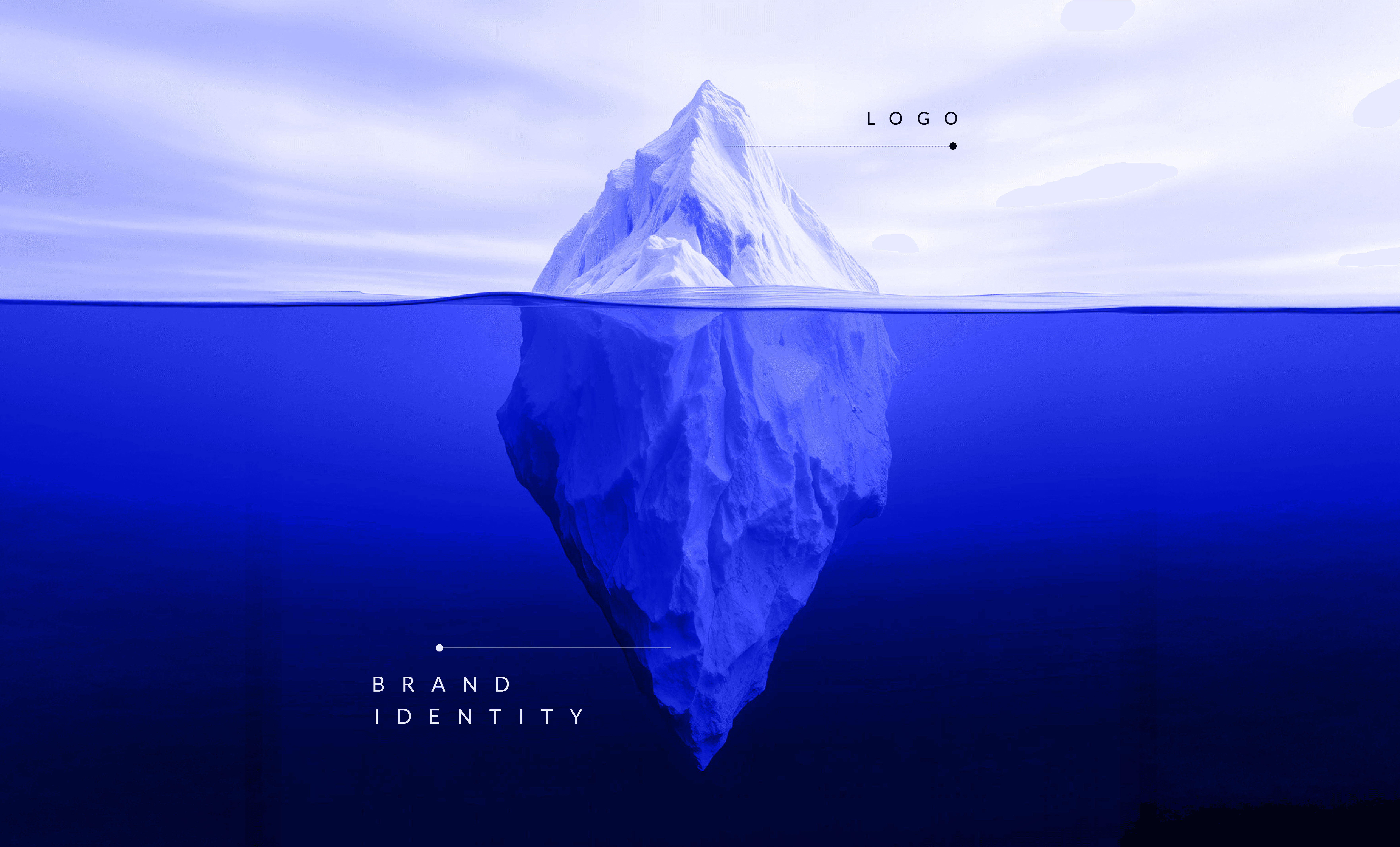
We see a lot of early brands think brand identity means logo, colors, and fonts. What no one tells you: having a "premium" logo won't attract premium clients if your brand pillars are unclear. We've seen founders spend $5,000 on a logo redesign and still struggle to close their first sale.
That’s because a brand identity's real job is to help someone quickly understand what you do, why they should trust you, and how you visualize that.
Think of your brand identity as a first impression that happens in 3 seconds, across every touchpoint.
Here's the reframe: If you want to attract your first clients, these are the signals they're subconsciously looking for. They're not consciously thinking "Does this brand have defined pillars?" But they are feeling whether something clicks or doesn't.
Let's walk through the six essential elements. As you read, honestly assess where your brand stands.
1. A clear brand snapshot
This is your foundation, where the internal clarity makes everything else possible. Your brand snapshot includes:
- What you do
- Who you serve
- What problem do you solve
- Your mission and vision
Clarity matters because confusion is a conversion killer. If it's unclear internally, it will be unclear externally.
The difference looks like this:
Vague: "We help businesses grow through digital solutions"
Clear: "We help SaaS startups convert free trial users into paying customers through automated email sequences"
The second one immediately tells you who it's for (SaaS startups), what they do (email automation), and the outcome (trial to paid conversion). A potential client knows in seconds if this is for them.
💡Quick Self-Check:
- Can you explain what you do in one sentence without industry jargon?
- Would someone outside your industry immediately understand who you help?
- Can your team members articulate your brand snapshot consistently?
2. Defined brand pillars
Brand pillars are the 3-5 core principles that guide how you show up, what you prioritize, and what you don't do.
These might include:
- Transparency over perfection
- Speed without sacrificing quality
- Education-first selling
- Accessibility for all budgets
- Sustainability in every decision
People want to support brands that align with their values. When you're upfront about what you stand for, it's easy to get people on board and build your audience.
Real-world example: When Patagonia says "We're in business to save our home planet," they're not just being noble. They're filtering their audience. Outdoor enthusiasts who care about sustainability self-select in; bargain hunters looking for the cheapest fleece self-select out. That's strategic.
Your brand pillars also guide decision-making internally. When you're deciding whether to offer a rush service, launch a new product line, or partner with another brand, your pillars give you a filter.
💡Quick Self-Check:
- Can you name your 3-5 brand pillars right now?
- Do these pillars influence actual business decisions (not just marketing copy)?
- Would your ideal client resonate with these values?
3. A Consistent Personality & Tone
This is not just what you say, but how you say it.
Are you:
- Friendly vs authoritative
- Bold vs refined
- Playful vs serious
- Conversational vs formal
- Irreverent vs respectful
Your tone should be consistent across your website, social media, email newsletters, sales calls, and even customer service interactions.
And here's a critical note: don’t use AI to guide your language without editing it. It's a turnoff for consumers.
Nothing screams "I used ChatGPT" like starting every post with "In today's fast-paced world" or "You don’t just do this… you do that", or "Built for…" Your audience can tell. An authentic voice is human even if it is not perfect all the time. It has quirks, opinions, and personality.
People hire brands they feel aligned with. Inconsistent tone feels unprofessional, even subconsciously. If your website sounds corporate and serious, but your Instagram is full of memes and casual language, potential clients get confused. They don't know which version is the "real" you, and confusion kills trust.
Example in action:
Compare these two Instagram captions for a productivity app:
Generic AI tone: "Maximize your efficiency with our cutting-edge task management solution. Transform your workflow today."
Distinct brand voice: "You have 47 tabs open, and three abandoned to-do lists. We get it. Close the tabs. We'll handle the tasks."
The second one has personality. It acknowledges the real problem with empathy and humor. You can immediately sense who this brand is.
💡Quick Self-Check:
- Would a stranger scrolling through your Instagram for 30 seconds understand your brand personality?
- Do your emails, website, and social media all sound like the same "person"?
- Have you documented your tone guidelines so anyone creating content knows how to sound like your brand?
4. Foundational visual elements
Now we get to the part most people start with, but it only works when built on the foundation above.
Your visual identity includes:
- Logo usage - wordmark, brandmark, how it appears on black backgrounds vs white backgrounds, minimum sizes, what NOT to do with your logo
- Core colors - primary vs. secondary palette, where each is used
- Typography roles - which fonts for headings, body copy, subtext, buttons, etc.
- Characters/Mascots - if applicable, their persona, design specifications, and what situations they're used in (Example: the GEICO gecko is friendly, helpful, always in scenarios where he's explaining insurance simply)
- Photography style - people vs. products, candid vs. staged, bright vs. moody, diverse representation
- Patterns or other visual elements - accent lines, background textures, graphic shapes
Why it matters:
- Does your look match your personality? If you're a bold, disruptive brand but your colors are muted pastels, there's a disconnect.
- Could someone recognize your brand without your logo on it? Think about brands like Tiffany (that specific blue), Spotify (bright green and black), or Glossier (millennial pink and minimalism). Their visual language is so distinct, you'd recognize their content even without a logo.
- What makes you visually different from competitors? If you're a wellness brand using the same sage green and cream as 10,000 other wellness brands, you're invisible.
The technical piece people miss: You need a documented system for how these elements work together. Not just "here's our logo" but "here's our logo on a dark background, here's the minimum size it can be used, here's how much clear space it needs around it, here's what happens when it's on top of a photo."
💡Quick self-check:
- Do all your visuals feel like they belong to the same brand family?
- Could you hand your visual guidelines to a new designer, and they'd know exactly how to create on-brand work?
- Does your visual identity actually reflect your brand personality and pillars?
5. How you show up online
Your brand identity lives everywhere your potential clients look for you:
- Website - your digital home base
- Social channels - Instagram, LinkedIn, TikTok, wherever your audience hangs out
- Review sites - Google, Yelp, Trustpilot, industry-specific platforms
- Search engines - what shows up when someone Googles your name
- Email signature - yes, even this matters
- Virtual backgrounds - if you take Zoom calls with clients
First clients almost always "check you out" before contacting you. They're doing research. They're looking at your Instagram to see if you're active. They're reading reviews to see if your website looks legitimate or like it was built in 2010.
Your reputation is your brand identity, too. How you respond to reviews, how quickly you reply to DMs, whether your "About" page has a real photo of you or a stock image, all of this contributes to the identity you're building.
💡 The audit exercise: Google yourself right now. Open an incognito window and search for your business name. What shows up? Click through the first 5 results. Do they all feel like the same brand? Is anything outdated, inconsistent, or missing?
Then do the "customer journey check":
- Find your Instagram (or main social platform)
- Scroll for 30 seconds like a potential client would
- Click the link in your bio
- Land on your website
Does that journey feel seamless? Or does it feel like three different businesses?
💡 Quick Self-Check:
- Have you claimed and optimized all your business listings (Google Business, etc.)?
- Does your website reflect your current brand, or is it outdated?
- Are your social profiles using current logos, bios, and brand colors?
- Have you Googled yourself recently to see what potential clients see?
6. Proof through assets (even just a few)
This is the element most early brands overlook, but it's what makes your brand identity usable and scalable.
You need examples of your brand in action:
- Social media templates - Instagram posts, Stories, LinkedIn graphics
- One-pagers - sales sheets, service explainers, case study templates
- Presentation decks - pitch decks, client onboarding slides, webinar templates
- Website sections - how different page types are structured and styled
- Email templates - newsletters, welcome sequences, proposal follow-ups
Your brand identity will be used by many people in your organization. Even if you're a solopreneur now, you'll eventually hire a VA, bring on a contractor, or work with a marketing freelancer.
Especially when partnering with new designers, having examples of how you've pieced together your brand in the world is key to how others interpret and design for your brand.
Here's what this looks like in practice:
Imagine you hire a designer to create an Instagram carousel. If all you give them is "use our colours and logo," they have to make 100 small decisions:
- What size should the logo be?
- Where does it go?
- How much text fits on each slide?
- What's the hierarchy of information?
- Should there be icons? Photos? Graphics?
- What's the spacing between elements?
Now, imagine you show them 3 past Instagram carousels you love. Suddenly, they see the pattern. They understand the vibe. They can create something new that still feels distinctly "you."
Start small: You don't need 50 templates. Start with:
- 3 social post designs you can replicate
- 1 one-pager template
- 1 email template
- Your core website page layouts documented
These become your "North Star" examples with the proof points of how your brand comes to life.
💡Quick Self-Check:
- Do you have at least 3-5 branded assets you can point to as examples?
- Could someone recreate your brand style by looking at your existing content?
- Are your best examples documented somewhere accessible (Google Drive, Notion, brand folder)?
Thousands of businesses have built a strong brand foundation without spending a fortune. At Design Pickle , we help founders do this efficiently by providing the creative support and tools needed to create a practical, scalable brand guide.
Here’s what you can request from Design Pickle to build your brand guide:
- Visual standards: Document logos, color palettes, typography, photography style, and illustration rules.
- Example assets: Show how your brand comes to life in social posts, pitch decks, landing pages, and one-pagers.
- Template libraries: Pre-built Canva templates that anyone on your team can use without risking brand inconsistency.
- Custom typography: Create unique type styles and rules for consistent headlines, body text, and pairings.
- Logo animations: Animated logos for videos, social posts, or digital headers to plug into any video you post.
With these elements in place, your team can create content at scale without wasting time on revisions or second-guessing what “on-brand” looks like. Need 20 social posts this month? A new landing page? A pitch deck? Your creative team has a clear system to execute consistently from day one.
You don't need a $50K rebrand. You just need a solid foundation: clear messaging, defined visuals, consistent execution, and proof that your brand works across real-world applications.
At Design Pickle, we start every client relationship with a Brand Audit to make sure we understand your brand deeply and to help you identify gaps that might be holding you back.
Whether you work with us or another creative partner (or tackle some of this yourself), the six elements in this guide are your roadmap.
Want to see how your brand stacks up? Get started to get your brand audit.
Not ready yet? That's okay. Bookmark this guide, do the self-assessment above, and come back when you're ready to turn your brand identity into a client-attraction engine.