
Creative Burnout in Marketing Teams: Signs, Costs, and Fixes
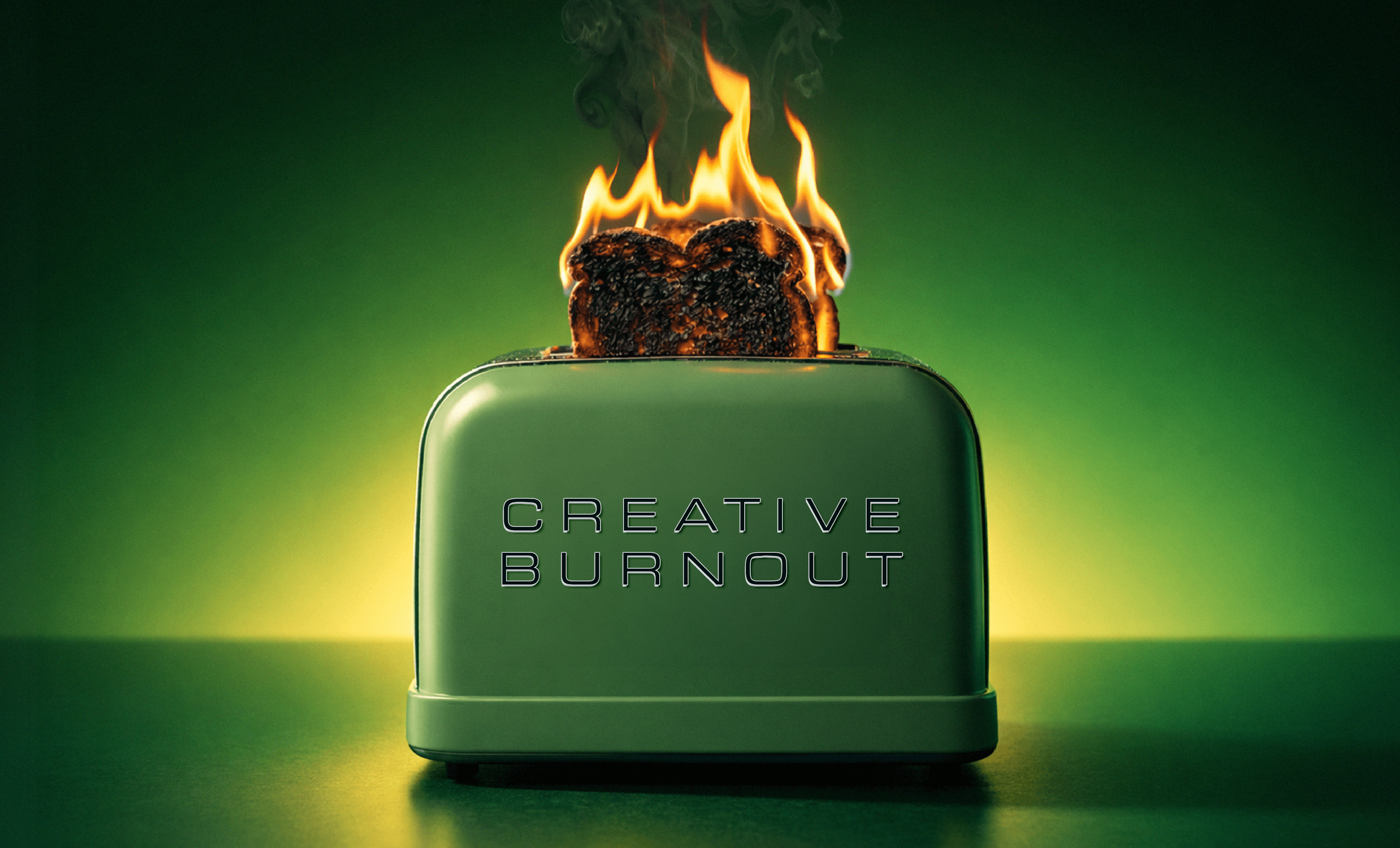
Your best designer just gave notice and your marketing manager's emails have gotten shorter and less enthusiastic. The team that used to pitch creative ideas now just asks "what do you need?"
This is creative burnout, and if you're running a marketing operation, it's probably already affecting your results whether you've named it or not.
1. Speed without the urgency - Projects that used to take two days are suddenly taking four, with no clear explanation. Your designer isn't rushing anymore because they've stopped caring about the timeline the way they used to.
2. Silence where ideas used to be - Brainstorms that used to spark debate now end in awkward quiet. The team member who used to pitch "what if we tried this angle?" now just waits to be told what to do.
3. Good enough becomes the standard - You're getting technically acceptable work, but nobody's excited about it anymore. The "I'm proud of this" moments have been replaced by "here's what you asked for" deliverables.
4. The Slow fade before the exit - Sick days cluster around Mondays and Fridays. Frustration with revision requests becomes visible. Resentment toward stakeholders creeps into everyday interactions. By the time you see these signs, you're already managing an exit.
Creative roles have always been demanding, but modern marketing created a perfect storm:
- Your content backlog is infinite, it is what it is - There's no end to what you could produce. Social media alone is a content monster that's never satisfied. Add email sequences, website updates, sales enablement, event assets, paid campaigns, and you're asking your team of five to do work that could absorb fifty people.
- Your planning cycles have compressed to nothing - The breathing room you used to have is gone. Everything in your operation is responsive, reactive, real-time now. There's no buffer between the idea and the execution deadline anymore.
- Your stakeholder list keeps growing - Design by committee is the default. A single asset needs sign-off from your marketing team, product, sales, legal, and the executive team. Each round of feedback extends the timeline, and your designer is sitting there trying to incorporate contradictory input from people who fundamentally disagree with each other.
- Your tools created a perception problem - "Can't you just do it in Canva?" might be the most demoralizing sentence your designers hear. The democratization of design tools is great for accessibility, but it's created this expectation that professional creative work should be as fast as dragging and dropping a template. The tools make production possible, but they don't make it easy, and they definitely don't make it good.
Here's what I've learned from watching thousands of teams cycle through burnout: it's not just a people problem. It's one of the most expensive operational failures in marketing, and most companies have no idea what it's actually costing them.
- Replacement costs are brutal. Losing a marketing professional costs 50-200% of their annual salary when you factor in recruiting, onboarding, and ramp-up time. For an $80K role, that's $40K-$160K per departure. Three departures in a year? You've burned half a million dollars in replacement costs alone.
- Institutional knowledge walks out the door. Your brand voice, the context behind past campaign decisions, stakeholder preferences that aren't written anywhere, all of that disappears. And you don't realize what you've lost until you desperately need it and it's gone.
- Quality degrades long before the departure. This is what really hurts the business. Before someone resigns, their output quality has been declining for months. After they leave, there's a gap before the replacement is productive. You're losing performance on both ends.
- Team morale becomes contagious. One burned-out team member affects everyone around them. Cynicism spreads. "Why bother?" becomes the dominant attitude, and the people who are still engaged start questioning why they're working so hard.
I've watched companies spend six figures on a rebrand while simultaneously losing $300,000 to turnover because nobody connected those dots. Burnout is an expensive operational problem that's chronically under-measured.
Here's the pattern I see in almost every burned-out marketing team, and it's so predictable I can spot it from the first conversation:
- Team is sized for a certain output level
- Business grows, demands increase faster than headcount
- Team absorbs the extra work through nights and weekends
- Burnout begins, quality drops, turnover starts
- Remaining team absorbs departures, accelerating burnout
- Crisis forces hiring, but it's too late—culture is damaged
The fundamental mistake: treating creative capacity like it's infinitely elastic. It's not. Everyone has a breaking point, and modern marketing systems push people right up against that limit constantly.
- Start by separating strategy from production.
- Your internal team should be setting brand direction, making creative decisions, and leading campaign thinking, not executing every asset request that lands in their inbox. Take a hard look at where your team's hours actually go. If the answer is production volume, something needs to change. Build or bring in systems that handle that volume so your team can do the work they were actually hired for.
- Next, give yourself a real capacity room.
- If you're consistently running at 100%, you're already behind. Build in a 20 to 30% buffer. That margin is what lets your team absorb spikes without burning out. The goal is sustainable output, not a sprint that never ends.
- Then audit what's actually custom versus what just feels that way.
- Most creative teams dramatically underestimate how much of their work follows repeatable patterns. Go through your last month of output and ask: what here could be templated? The answer is usually more than you'd expect. When your team stops recreating the same social post layout for the 40th time, that's real time back in their week.
- Finally, protect your team's time by enforcing actual intake standards.
- Rush requests should be rare. If everything is urgent, nothing is planned. One of the most effective changes I've seen is a simple 48-hour minimum turnaround. You'll find that most emergencies weren't.
The real reason creative teams burn out
Early in building Design Pickle, I thought we were solving a capacity problem. The deeper problem was structural. Business growth kept demanding more creative output, but burning out the core team wasn't sustainable. They needed a way to handle production volume without requiring heroics from the people doing the work.
That's what subscription-based creative services actually solve. Your team focuses on strategy. Production flows through a system built to handle it. The work gets better because they're not exhausted.
Creative burnout isn't a failure of commitment. It's what happens when you treat creative capacity as unlimited. Fix the system and you retain people better, produce better work, and stop cycling between bursts and recovery.
Ready to get off the hamster wheel?